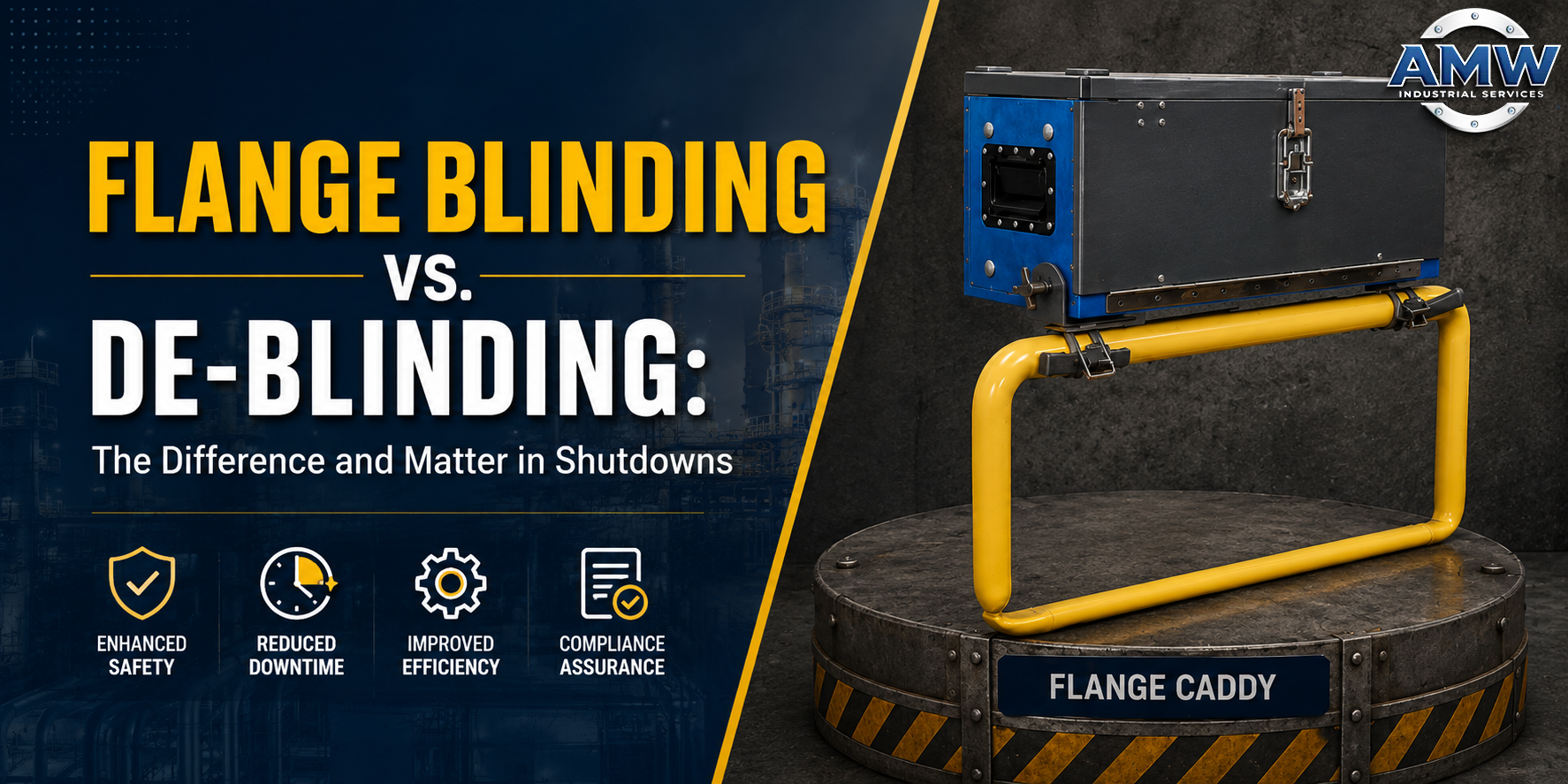
Blinding and de-blinding are one of the most critical processes in plants, refineries, and chemical plants for personnel safety. Blinding is done during shutdown periods and turnarounds to isolate pipes or equipment from pressure, liquid, or gas flow prior to maintenance work being carried out and reconnected before starting up the plant.
Most people think that closing the valve is enough, but this misconception has caused many accidents in the past. AMW Industrial Services, the flange blinding system supplier in Alberta, follows various safety standards such as ASME and API have indicated that blinding and de-blinding are the key processes in the isolation process. This blog is to differentiate the two and explain their differences. Also, connect with AMW Industrial Services for the flange blinding toolbox.
Blind flanging during shutdown is a simple but very powerful method. The flow of the substance through the pipe is stopped first, and then the pressure is released. Only after the rest of the material has been drained away can the safety permit to work on the line be checked.
Then they open the flange, which is the junction between the two parts of the pipeline. In this joint, a solid metal plate, known as a blind, is inserted between the two parts of the pipe. It is a complete blockage of the pipe.
The plates are torqued down, and the seal integrity is verified. All blinds are marked so that there is no confusion as to where the plates are.
AMW Industrial Services is the most reliable flange equipment supplier in Alberta and offers great shutdown maintenance tools like wrenches, blinds, and tags to do this task properly. After the repair work is done, the blinds must be taken away, and operations can be resumed.
The selection of the pipes to blind starts with the review of the drawings showing the interconnections of all pipes and equipment. Then they check what is in the pipes, how hot, high-pressure, or dangerous the material or gas is. If there is any danger, then they should be blinded, not closed by valves.
Moreover, engineers perform a hazard review to determine the pipelines that could be a hazard if not blinded. Then, after all that, the only blinds needed are listed with sizes and types.
The most important thing to minimise time is having pre-organized tooling kits with all the required blinds, gaskets, and tools.
We ensure that there is safety while the facility is closed down because of complete protection of the piping system prior to performing any maintenance. Good planning and tooling will make sure that there are no mistakes or leaks. For a smooth operation, please feel free to contact AMW Industrial Services today. Using pre-organised tooling kits is a much easier, safer, and more organised way to do the job.
You have to rent it several weeks before the shutdown. This is particularly important during the most hectic shutdowns to get the necessary tools and sizes in time.
Valves tend to leak and do not work well even after locking. The blind is a plate used to block the pipe.
Blinding occurs early in the shutdown process, after the pipe has been emptied and cleaned.
2026 Copyright ©AMW INDUSTRIAL SERVICES